

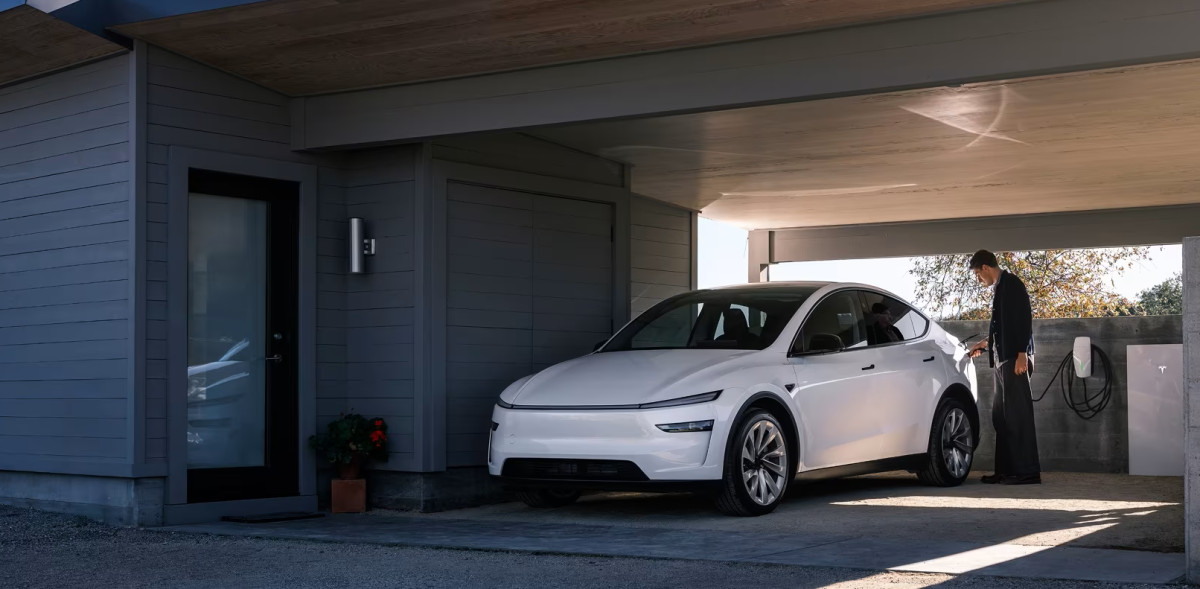
Free EV charging is real. It happens when rooftop solar, daytime charging, and a smart EV charger work together to use surplus solar power instead of grid electricity. But the secret isn’t just solar panels — it’s a properly installed smart EV charger that can draw from excess solar energy at the right time
While public chargers and home charging from the grid still cost money, Australian homeowners can significantly reduce charging costs by pairing a properly sized solar system with the right EV charger.
In this guide, we’ll explain why charging is not always free, how smart charging works, when to charge for the best results, and which EV charger options can help you get the most from your solar.
Find out how to time your charging around your solar output — and which charger makes it possible.
Why EV Charging Isn’t Always Free
There is a misconception among drivers that electric vehicles are cheaper to run. Maybe, in some cases, compared with petrol, but that does not mean charging always comes at no cost.
In fact, you have to pay a steep premium for charging at public stations, as they charge per kWh. Fast chargers are incredibly expensive, too.
| Charging Option | Typical Cost in Australia |
| Public fast charging | around A$0.60–A$0.85 per kWh |
| Public AC / destination charging | around A$0.30–A$0.50 per kWh |
| Home charging from the grid | roughly A$0.25–A$0.40 per kWh, depending on tariff |
| Solar charging with a smart EV charger | can be very low, especially when using surplus daytime solar |
Home charging from a standard power point also uses electricity from the grid unless you are charging with excess solar energy. If you depend on these options, costs can quickly multiply.
That is why many EV owners are surprised when their electricity bills mount after buying an electric car. Despite this, there is a better way to manage charging costs—if you have solar panels on your home.
The Real Secret: A Smart EV Charger Installed at Home
The real secret to low-cost EV charging is not just owning solar panels. It is installing a smart EV charger that can work with your solar system and household load.
“A smart EV charger truly lives up to its name; it functions as an intelligent energy management system rather than a simple power outlet. It delivers a multitude of operational and financial benefits.”
Besides powering your car, a smart charger functions in multiple ways. It is safe and efficient for home charging and can manage electricity flow around the house. That means it can avoid overloads while making better use of available solar energy.
Compared with a regular outlet, a smart EV charger gives you:
- Faster charging.
- Better safety for daily use.
- Load balancing across the home.
- Solar compatibility.
- More control over charging schedules.
This is how ‘free charging’ operates in reality. You are simply reclaiming surplus solar energy that would otherwise be wasted.
How Solar + EV Charger = Near-Zero Charging Cost
The process is simple, but it depends on having the right setup.
Here is how it works:
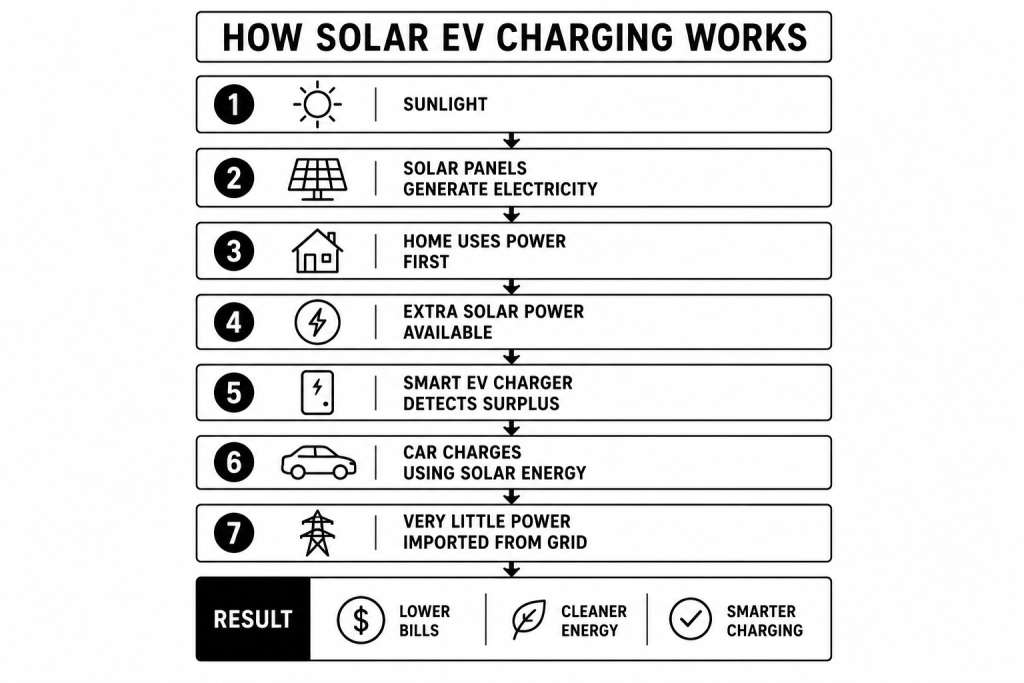
This process improves self-consumption and reduces your reliance on grid electricity— with savings that result from this.
In this process, you sell all your excess solar back to the grid at a lower feed-in rate and then buy electricity back later at a higher rate; you use that power directly in your EV.
This results in near-zero charging costs during daylight hours. It totally depends on your solar system size, the amount of sunlight available, and how much energy your household is already using.
Best Times to Charge Your EV Using Solar
| Best charging window: 10:00 am–3:00 pm. That’s when your solar panels usually produce the most power, so your EV charger can use more surplus solar and less grid electricity. Smart charger = automatic savings. It can start, pause, and adjust charging to match real-time solar output. |
Timing is a factor if you want to make the most of solar charging.
The best charging window is late morning to mid-afternoon. This is when solar production is strongest— roughly between 10 am and 3 pm, although this can vary based on the season, roof direction, shade, and system size.
Smart chargers can make this easier by automatically:
- Start charging when surplus solar is available.
- Pausing when household demand increases.
- Adjusting charging speed to match solar output.
- Scheduling charging for the most efficient time of day.
If you work from home or your vehicle is parked during the day, this can be a huge advantage. It lets you charge while your panels are producing the most power.
Do You Need a Smart EV Charger or a Basic Charger?
A basic charger functions, but a smart solar EV charger reduces running costs and uses solar more efficiently.
| Feature | Smart EV Charger | Basic Charger |
| Charging speed | Faster charging | Slower charging |
| Solar compatibility | Designed to work with solar systems | Usually no solar integration |
| Load balancing | Yes | No |
| Scheduled charging | Yes | Limited or manual only |
| App control | Often included | Usually not available |
| Running costs | Lower when paired with solar | Higher over time |
Homeowners can opt for A smart EV charger for flexibility and the ability to charge from excess solar. A basic charger, however, is functional, but it does not give you the same level of control or savings.
Popular EV Charger Brands
If you are looking for a quality home charging solution, two popular options are the Tesla Wall Connector and the Fronius Wattpilot.
Tesla Wall Connector
The Tesla Wall Connector is a popular choice among Tesla owners for home charging solutions. You can use it for fast charging at home, and it is a strong fit for drivers who want a reliable setup.
| Feature | Tesla Wall Connector |
| Charging Speed | Fast home charging |
| Best For | Tesla owners |
| Smart Features | Yes |
| Installation | Streamlined home setup |
| Convenience | Easy daily charging |
| Why Choose It? | Reliable, practical, and designed for Tesla vehicles |
Fronius Wattpilot
The Fronius Wattpilot is a smart charging solution for homes with Fronius solar systems. It maximises solar self-consumption and makes charging more efficient.
| Feature | Fronius Wattpilot |
| Best For | Homes with Fronius solar |
| Solar Integration | Maximises solar self-consumption |
| Charging Modes | Flexible options |
| App Control | Yes |
| Energy Use | Prioritises solar power |
| Why Choose It? | Greater control over EV charging and solar usage |
How Much Money Can You Save?
Your savings depend on several factors, including your electricity tariff, the size of your solar system, your charging habits, and how much you drive.
| Charging Method | Estimated Cost | Savings Potential |
| Public fast charging | Highest | Lowest |
| Grid home charging | Moderate | Moderate |
| Solar charging | Lowest | Highest |
Public fast charging is usually the most expensive option. Grid charging at home is more affordable, but you are still paying retail electricity rates. Solar charging with a smart EV charger gives you the best chance of reaching near-zero charging costs during the day.
Charging is not always completely free, and actual costs will vary. But for many households, solar charging can dramatically reduce the amount spent on driving.
Get a free estimate on your potential solar charging savings.
Why Choose Total Solar Solutions for EV Charger Installation
If you want the best results, the installation matters just as much as the product.
Total Solar Solutions offers custom-designed energy solutions that are built for your home, your vehicle, and your solar system. That means you are not getting a one-size-fits-all setup. You are getting advice and installation based on what will actually work for your property.
Here is what sets the service apart:
- Custom-designed solar and EV solutions.
- Expert solar plus EV integration.
- Licensed in-house electricians.
- Safe, high-quality installations.
- End-to-end support.
- Melbourne-based service.
This kind of support matters because the right charger needs to work with your roof size, energy usage, and charging habits.
Talk to Total Solar Solutions’ Melbourne team about a setup built for your property.
The Bottom Line
As discussed previously, charging an EV doesn’t automatically become free— but solar can make it much cheaper.
“Instead of sending your extra daytime solar power back to the electricity company, a smart charger traps that excess energy in your car battery so you don’t have to buy power from the grid.”
Choosing the right equipment and the right installer is the key. Total Solar Solutions can help you with the safest and most efficient solar EV charging solution—tailored to your needs.
Explore the EV Charger range, view the Tesla Wall Connector and Fronius Wattpilot options, or get in touch with the Total Solar Solutions team to discuss the best setup for your home.