

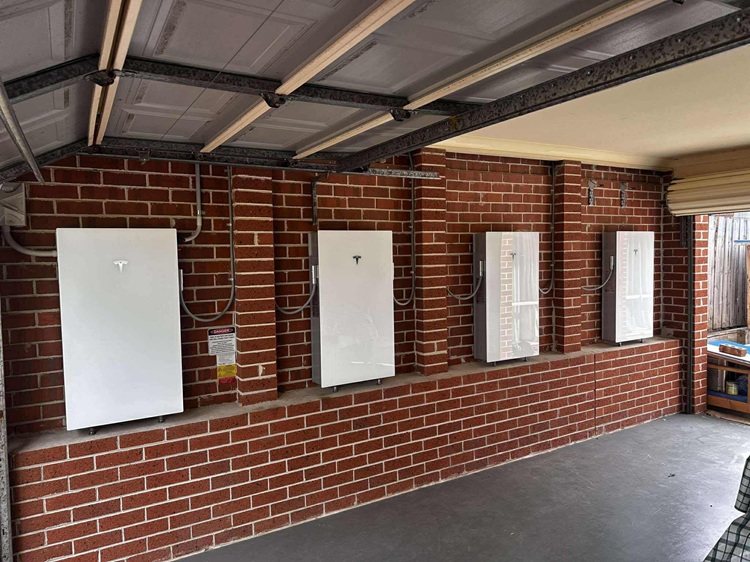
You’ve possibly already heard of Australia’s Cheaper Home Batteries Program; an innovative energy incentive that’s already helped households all over Australia reduce their reliance on the grid while saving thousands of dollars on battery storage.
But as of the 1st of May 2026, some major changes are coming to the rebate that will directly impact how much certain applicants can receive. So if you’ve been thinking about installing a solar battery, factors like the size of the system and the time frame in which you apply for it are likely going to affect you more from the 1st of May than they would have prior to that.
What is the Cheaper Home Batteries Program?
An important part of Australia’s SRES (Small-scale Renewable Energy Scheme), the Cheaper Home Batteries program was, in a nutshell, implemented to ensure that battery storage is made more affordable for Australian homes. Launched in July of 2025, the initiative was successful in driving more Australians to install solar batteries.
As the discount is government-funded, consumers incur no additional costs; indeed, via the SRES program, eligible households have been able to receive a discount of up 30% upfront of their upfront cost when installing a small-scale battery system; the deal applied to new or existing solar systems that were 5 kWh to 100 kWh. Eligibility for the discount is subject to the requirements set out in the Renewable Energy (Electricity) legislation.
How is the Cheaper Home Batteries Program Changing?
As of May 1, 2026, two major changes will go into effect:
Firstly, the later you install, the smaller your rebate will be.
The rebate will decrease more quickly over time; this is linked to an STC factor (support per kWh). Before May 1 the STC rate will be higher, but as of May 1st, it will drop to 6.8, and it will continue to decline every six months.
Secondly, a new tiered rebate based on battery capacity also takes effect.
Rebates will be: 0–14 kWh — 100% of the rebate; 14–28 kWh — 60% of the rebate; 28–50 kWh — 15% of the rebate.
That means standard home batteries (~10–14 kWh) remain well supported, while larger systems receive substantially reduced incentives. For example, a 13.5 kWh battery still qualifies for the full rebate; a 30 kWh system gets the first 14 kWh at full rebate, the next 14 kWh at 60%, and the remainder at 15%, yielding a much lower overall rebate.
Why is the Government Making These Changes to the Cheaper Home Batteries Program?
Simply put, as the Cheaper Home Batteries Program is expanding, certain changes need to be implemented in order to:
- Ensure incentives are kept fair across various different system sizes.
- Accurately reflect the falling prices of batteries.
- Ensure that the program can be made sustainable over a long period.
- Encourage Australians to install batteries that are appropriately sized to their household rather than oversizing.
Should I Install a Solar Battery Before or After May 1st 2026?
We recommend installing before May 1st 2026, if you wish to ensure the highest possible rebate and optimise the value you’re able to receive from the program. It’s worth noting that early installation is especially important for home or business owners or businesses who are planning to install a larger battery system, as the incentive structure tends to favor higher-capacity systems more strongly before the cutoff.
By installing your solar battery before May 1st 2026, you are also eligible to lock in the more generous Short‑Term Credit (STC) rates that are scheduled to decrease afterward, thereby protecting your project economics from the upcoming reductions.
Conversely, if you would prefer to install after May 1st 2026, this approach may suit you better if you’re fitting a standard‑sized battery (e.g. something in the 10–14 kWh range), because you’re less likely to be affected by the expected drop in rebate amounts. Indeed, waiting until after May 1st may be a sensible choice for people who want more time to evaluate their product options, monitor potential price changes, or coordinate installation timing with their other home upgrades
It’s worth remembering that although the rebates are likely to be smaller, the extra delay may provide you with greater flexibility to choose newer models or take advantage of market shifts.
Why Do I Need a Solar Battery?
You’re probably already across the significant environmental and financial benefits of solar energy in general. But why the battery?
Simply put, without a battery, the excess energy your solar system generates will go to waste, rather than your advantage. Any electricity your panels produce beyond what your home consumes is exported to the grid, and when sunlight fades the panels stop generating while your home continues to draw power from the grid. Current minimum feed-in tariffs are fairly low, which means exporting excess solar earns little return unless you can store it for later use.
As such, adding a home battery captures surplus solar generation and stretches its value across the day, reducing evening grid dependence and providing power during outages. If the battery is fully charged, however, any further surplus will still be exported to the grid.
A well-designed battery system installed by qualified professionals can automatically detect a blackout and supply selected essential circuits (such as the refrigerator, lighting, security equipment, internet, power outlets, and other necessary appliances) until grid power is restored.
I’m Ready to Install a Solar Battery — What Next?
You can browse our range of high quality batteries here. At Total Solar Solutions, we recognise every home has unique needs, so we offer a range of battery options, including Sigenergy, and the Tesla Powerwall 3.
We take great pride in supporting local homes and businesses through their solar and electrification journeys, and we also specialise in solar PV, battery systems, EV charging, heat-pump hot water system, and a wide range of electrical services. As a family-owned business serving the local community since 2012, we stand behind our quality craftsmanship and customer care. When you’re ready, simply get in touch with our expert consultants via email, or by calling us on (03) 9729 0894.